♾️ Contherian
Therian Types & Shifting Styles
By the Inner Therian team · Last updated October 10, 2026
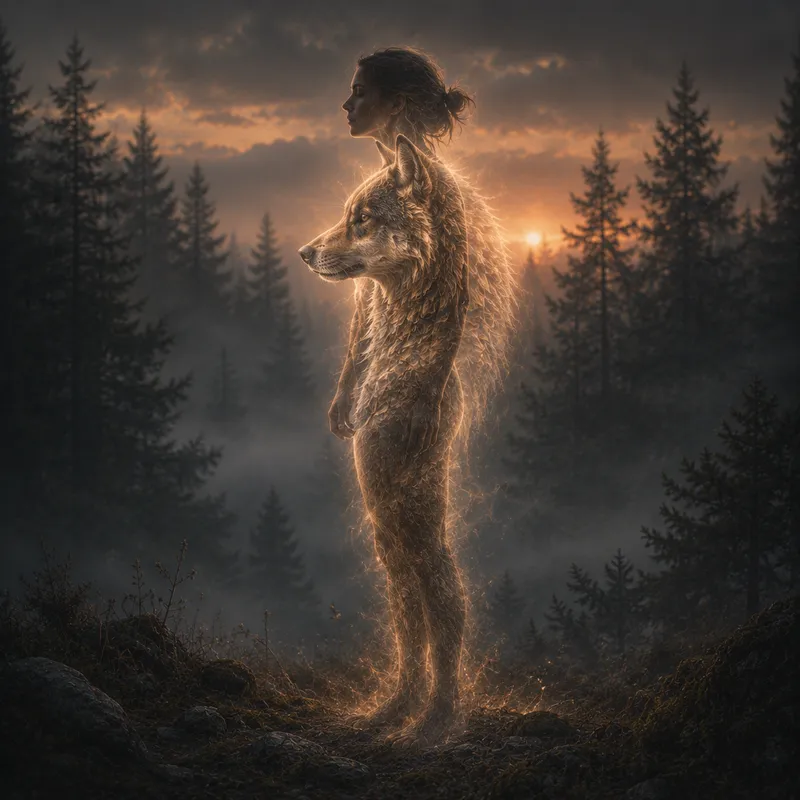
A contherian (from "contherianthropy") experiences a constant, integrated state — human and animal blended together at all times, with little or no shifting.
For contherians, the animal side isn't something that comes and goes; it's simply always present and woven into everyday awareness. Because there are no distinct shifts in and out, some contherians describe their experience as quieter or more subtle than therians who shift — but it is just as real and central to who they are.
What "constant" looks like in everyday life
Because nothing switches on or off, many contherians find their therianthropy is easiest to spot in small, ordinary habits rather than dramatic moments. It shows up in how they move through a room, what comforts them, and how they read other people — all the time, at a steady level.
Some patterns contherians commonly describe:
- Settled instincts. A wolf contherian might always be quietly aware of where everyone in a group is; a cat contherian might always prefer a high, sheltered spot to sit.
- Stable preferences. Likes and dislikes around food, sleep, space and touch that have felt "animal" for as long as they can remember.
- No before-and-after. There is no shift to come out of, so there's rarely a moment of "that was my animal side just now" — it is simply them.
- Background body sense. Some contherians report a faint, ongoing sense of a different shape, posture or set of limbs, rather than phantom shifts that arrive and fade.
None of these are a checklist. They're examples of the kind of quiet, continuous presence the word is trying to capture.
Contherian vs suntherian vs vacillant
These three labels all describe how the animal side is experienced over time, not which animal it is. The easiest way to tell them apart is to picture a line graph of "how animal do I feel today?"
| Label | Shape of the line | Distinct shifts? |
|---|---|---|
| Contherian | Flat and steady — the same blend every day | Little or none |
| Suntherian | A steady baseline with soft waves above and below it | No full shifts |
| Vacillant | A smooth, gliding curve between more human and more animal | Gradual, not sudden |
If you notice your animal side gets a little stronger on some days but never leaves, suntherian may describe you better. If it is truly level, contherian fits. Plenty of people sit near the borders, and that's fine.
Why it can be harder to recognize
A lot of therian writing focuses on shifts: the moment an instinct takes over, the sudden sensation of ears, the urge to move on all fours. Contherians often read those accounts and wonder whether they qualify, because nothing like that happens to them.
The difficulty is that a constant trait is hard to notice from the inside. If you have always reacted to the world a certain way, it feels like "just how people are" until you compare notes with others. Many contherians describe realizing slowly, by noticing over years that their baseline differs from the humans around them in consistent, animal-shaped ways.
It can help to ask people who know you well what they've always noticed about you, or to look back at childhood habits. Patterns that have been there all along are exactly what this label describes.
Questions to reflect on
- If I imagine my "most animal" day and my "most human" day, are they actually different — or about the same?
- Do I ever feel like I'm coming out of something, or returning to normal?
- Which of my instincts or preferences have stayed the same since childhood?
- Does the idea of a separate "shift" feel foreign, or just rare?
- Does "integrated" feel accurate, or more like a description of someone else?
Writing answers down over a few weeks gives a clearer picture than deciding in one sitting. If you're still mapping out whether you're a therian at all, the awakening and questioning guide is a gentler place to start.
Common misconceptions
"No shifts means less therian." Shifting is one way therianthropy is experienced, not the definition of it. Being a therian is about identifying as an animal; a contherian's identity is just as real and just as central.
"Contherians must have a strong, obvious animal personality." Integrated often means subtle. Many contherians come across to others as entirely ordinary people.
"Constant means it can never change." Labels describe your experience as it is now. If your pattern shifts over the years, you can simply update the word you use.
🌟 In Short
- You feel equally animal and human at all times
- You experience little or no shifting in and out
- Your animal side feels constant and integrated, not episodic
Contherian FAQ
Can a contherian ever have a shift?
Yes, some do. The label means shifts are rare or minimal, not impossible. A contherian might have an occasional dream shift or a brief sensation and still find "contherian" the best description of their everyday experience.
Is contherian the same as not knowing if I shift?
Not quite. Contherian describes a constant, integrated animal side. If you are unsure whether you shift because you are still questioning, it may be too early for a shifting-style label — and that is completely fine.
Can a contherian also be a polytherian or paleotherian?
Yes. Contherian describes how your animal side feels over time, while polytherian or paleotherian describe which or how many theriotypes you have. The labels combine freely.
Do I need to use the word contherian at all?
No. Many therians never use a shifting-style label. It is a descriptive tool for explaining your experience to others, not a requirement for being a therian.
Is being a contherian a sign that something is wrong?
No. Having a constant animal side is not a mental illness and not something that needs fixing. If you ever feel distressed or overwhelmed, that distress is worth talking through with a trusted adult or professional, but the identity itself is not the problem.