🐻 Bear
Type: Theriotype (real, earthly animal)
By the Inner Therian team · Last updated October 10, 2026
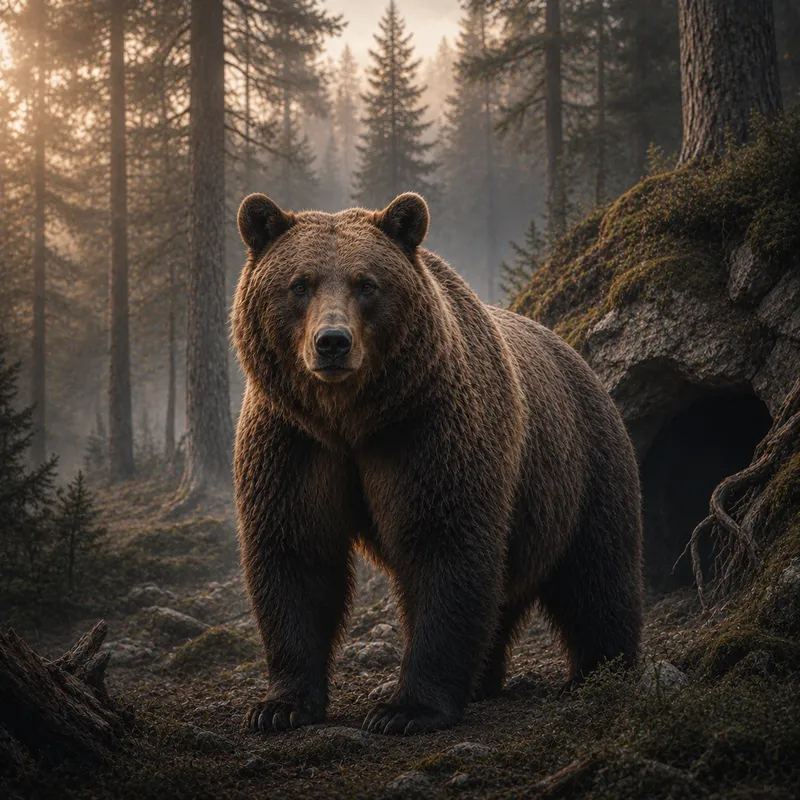
Bear therians are strong, calm, and self-sufficient. Bears are powerful solitary animals that value their own den and territory — and bear therians often describe a grounded independence and fierce protectiveness of what's theirs.
Bear therians tend to be gentle and easygoing until something they care about is threatened. Many crave solitude, comfort, and their own space, with a deep, steady strength and a love of rest and good food.
Eight Bears, Eight Ways of Living
There are eight living bear species, and they live very different lives:
- Brown bear (including grizzlies and Kodiak bears): found across North America, Europe and Asia.
- American black bear: a forest bear that climbs well and eats mostly plants.
- Polar bear: a marine hunter that spends much of its life on sea ice and depends heavily on seals.
- Asiatic black bear, recognizable by the pale crescent on its chest.
- Sloth bear of South Asia, which sucks up termites through a gap in its front teeth.
- Sun bear of Southeast Asia, the smallest bear, with a very long tongue for reaching honey and insects.
- Spectacled bear of the Andes, the only bear native to South America.
- Giant panda, which is a true bear that eats almost nothing but bamboo. (The red panda is a separate animal and not a bear.)
Many bear therians identify with one specific species, and the species can make a big difference. A polar bear therian's inner world, with ice, open water, patience and the hunt, can feel very different from a black bear therian's world of forests, berries and climbing.
Bear Biology Worth Knowing
Bears have an excellent sense of smell, often described as among the best of any land mammal. A lot of what a bear knows about its world comes in through its nose. They walk flat-footed on the soles of their feet, like humans do, which partly explains why bear tracks can look oddly human.
Most bears are omnivores, and for many species plants make up most of the diet. In late summer and autumn, bears in cold climates go through a period of intense eating, sometimes called hyperphagia, to build up fat before winter. They then spend the winter in a den in a deep, energy-saving state. Scientists debate whether to call it true hibernation, because a bear's body temperature drops only a few degrees and bears can wake up. Even so, black bears can go months without eating or drinking.
Adult bears are mostly solitary, but not entirely. Mothers raise their cubs for one to three years, depending on the species. Brown bears gather in groups at good salmon rivers and work out a ranking among themselves. And for an animal that looks heavy, a brown bear can run surprisingly fast over short distances.
How Bear Therians Often Describe It
Bear therians often describe a grounded, heavy, unhurried sense of self, a bit like being an animal that has no reason to rush. Common themes include:
- Seasonal rhythms. Many feel a strong pull toward rest, comfort food and "denning" as the days get shorter, and more energy in spring. (Low mood in winter is also common in humans generally, so if winter feels really heavy, talk to a doctor about it.)
- A nose-first world. Sensory shifts often center on smell, such as noticing food, people and places by scent.
- Phantom body. Broad shoulders, heavy paws with long claws, and a sense of being much larger and lower to the ground. Some describe the urge to stand tall when facing something difficult.
- Slow to anger, hard to stop. A calm, easygoing default with a fierce protective side when someone they love is threatened.
A bear's strength is a good reason to be careful during intense or feral shifts. A shift is an internal experience. If you feel the urge to swipe or roughhouse, redirect it into exercise or a pillow, and never take it out on people or animals.
Bear or Another Strong Animal?
- Bear vs. tiger. Both are large and mostly solitary. Tigers are ambush hunters that only eat meat, and tiger shifts tend to be about stalking and precision. Bear shifts more often involve foraging, wandering, rest and smell.
- Bear vs. wolf. Wolves live for the pack. Most adult bears are comfortable on their own. If being alone is a recharge for you rather than something hard, that's a clue.
- Bear vs. someone who finds bears comforting. Plenty of people find bears cozy or reassuring without being bear therians. Feeling a kinship with bears may be otherhearted, which is a meaningful identity in its own right.
Reflection Questions
- Does your energy follow the seasons, and has it always done so?
- When you picture your "den," what is it like: a cave, a hollow tree, a snow drift, a nest of blankets?
- Is your protectiveness aimed at a few specific people, like a mother bear with cubs, or at a whole group?
- Which bear species' habitat feels most like home to you?
🌟 Signs the Bear Might Be Your Theriotype
- You're calm and self-sufficient
- You deeply value solitude and your own space
- You're gentle until something you love is threatened
- You carry quiet physical strength and presence
- You experience phantom large paws or claws
🌀 Common Shifts
Bear therians often report grounded mental shifts, phantom shifts of paws/claws, and a strong pull toward "denning." Learn more on our shifts guide & quiz.
💚 A Note on Respect
Your theriotype isn't a choice, a phase, or a costume — and only you can truly know it. A quiz like ours can point you toward animals worth reflecting on, but take your time. There's no "fake" therian and no rush. If the Bear resonates, explore it gently through introspection, dreams, and community.
Bear Theriotype FAQ
Is a panda a valid bear theriotype?
Yes. The giant panda is a true bear, and some therians identify specifically as one. The red panda isn't a bear, so a red panda therian would be a different theriotype.
Do bear therians actually hibernate?
No. Humans can't hibernate, and you still need to eat, move and see daylight in winter. Many bear therians do feel a strong seasonal pull toward rest and comfort, and gentle routines like cozy evenings can help satisfy it in a healthy way.
Is it bad that I feel protective and intense?
Protectiveness is a good quality. What matters is how you express it. Bear therians, like everyone else, should never use their theriotype as a reason to hurt anyone. If anger feels hard to manage, a counselor can help.
Can I be a polar bear therian if I live somewhere hot?
Of course. Your theriotype doesn't depend on where you live. Many polar bear therians describe a longing for cold, ice and open sea, even if they've never seen snow.
What shifts do bear therians commonly report?
Common ones include calm, heavy mental shifts, phantom paws and claws, sharpened smell, and a seasonal pull toward denning.