🦌 Deer
Type: Theriotype (real, earthly animal)
By the Inner Therian team · Last updated October 10, 2026
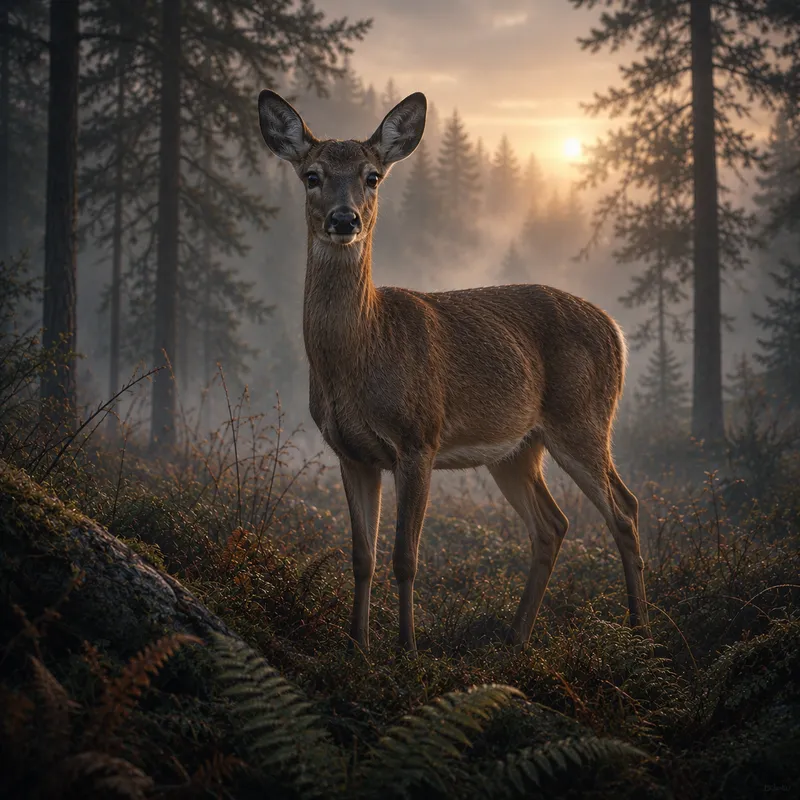
Deer therians are gentle, alert, and graceful. As prey animals, deer are finely tuned to their surroundings — and deer therians often describe deep sensitivity, quiet courage, and a soft way of moving through the world.
Deer therians frequently feel things intensely and notice subtle shifts in mood and environment. There's often a calm, careful watchfulness paired with a longing for safe, peaceful spaces and the freedom to run.
Which Deer Are You Drawn To?
"Deer" covers a whole family, the cervids, native to the Americas, Europe, Asia and a corner of North Africa, and introduced by people to places like Australia and New Zealand. A deer therian might feel drawn to one of many:
- White-tailed deer: the familiar deer of North America, known for flashing the white underside of its tail as an alarm signal.
- Mule deer: large-eared deer of western North America that bound away with a stiff-legged, springing gait.
- Red deer and elk: big, herd-living deer famous for the roaring and bugling of stags in autumn.
- Roe and fallow deer: smaller and graceful, common in European woodland.
- Reindeer (caribou): Arctic deer that migrate in huge herds, and the only deer in which females regularly grow antlers.
- Moose: the largest deer of all, solitary and surprisingly at home in water.
Paying attention to the size, climate and social life that feels right can help you notice whether you are "deer" in general or one species in particular.
Built to Notice Everything
Deer are prey animals, and nearly every part of their body is tuned for early warning. Their eyes sit on the sides of the head, giving them a very wide field of view, and are especially sensitive to movement and low light. Their large ears swivel independently to pinpoint sounds, and their sense of smell is far keener than ours.
Their usual response to danger is a sequence: freeze, assess, then flee. A deer may stand perfectly still, stamp a forefoot or snort, and then bound away at speed. Newborn fawns do something different: they lie hidden and motionless in the grass while their mother feeds nearby, relying on stillness and their spotted coat.
Deer are most active around dawn and dusk, and spend long hours chewing the cud, since they are ruminants with multi-chambered stomachs like cattle.
How Deer Therians Often Describe Their Experience
Many deer therians say their theriotype is felt most in the way they pay attention. Common descriptions include:
- Noticing sudden movements or sounds before anyone else, and freezing for a moment before reacting.
- Choosing seats with a clear view of the room or the door.
- Feeling calmest in quiet, green places: meadows, woodland edges, a garden at twilight.
- A deep need for a few safe companions, with a herd-like ease when they are close by.
- Phantom sensations of large swivelling ears, a short tail, or the weight of antlers during phantom shifts.
- An urge to run, leap, or simply move lightly through open ground.
Some deer therians experience sensory shifts where noise and crowds feel much more intense. Taking breaks in quiet spaces is a sensible way to look after yourself.
Gentle Is Not the Same as Fragile
Deer are often pictured as delicate, but that image leaves out a lot. Bucks and stags fight hard during the autumn rut, clashing antlers to compete for mates. Does defend their fawns fiercely, and a startled deer is powerful enough to clear tall fences. Antlers themselves are remarkable: made of bone, grown fresh every year under a soft, blood-rich skin called velvet, then shed after the breeding season.
Many deer therians relate to this mix of softness and strength. Being sensitive and cautious can sit alongside real courage, especially when protecting someone you love.
A note on wellbeing: an alert, startle-prone nature can be part of a deer identity, but being a deer therian doesn't mean you have to live with constant fear. If anxiety, jumpiness or overwhelm is making daily life hard, please talk with a trusted adult or a professional. Getting support for distress doesn't take anything away from who you are.
Deer, Rabbit or Horse?
Prey-animal therians often question between several gentle, alert animals. Some contrasts:
- Deer vs rabbit: rabbits are small, live in burrows and warrens, and dart for cover. Deer are larger, live in open woodland, and rely more on long leaps and speed across open ground.
- Deer vs horse: both are herd prey animals with wide vision. Horses have single hooves and long manes and are built for sustained running; deer have cloven hooves, often antlers, and bound in sudden bursts.
- Antlers vs horns: if you feel something on your head, notice whether it seems branched and seasonal (antlers) or a permanent, unbranched shape (horns, as in goats and antelope). Antelope are bovids, not deer.
If you aren't sure, our theriotype quiz can help you reflect on which animals keep coming up for you.
🌟 Signs the Deer Might Be Your Theriotype
- You're sensitive and notice tension before others do
- You move gently and carefully through life
- You long for safe, peaceful, natural spaces
- You feel quiet courage beneath your calm
- You experience phantom ears, antlers, or a heightened startle response
🌀 Common Shifts
Deer therians often report sensory shifts (heightened alertness), phantom shifts (ears, antlers), and prey-instinct mental shifts. Learn more on our shifts guide & quiz.
💚 A Note on Respect
Your theriotype isn't a choice, a phase, or a costume — and only you can truly know it. A quiz like ours can point you toward animals worth reflecting on, but take your time. There's no "fake" therian and no rush. If the Deer resonates, explore it gently through introspection, dreams, and community.
Deer Theriotype FAQ
Can I have antler phantom shifts even if my theriotype is a doe?
Yes, some do, and some don't. In most deer species only males grow antlers, but in reindeer both sexes do. Phantom sensations do not have to follow a strict rule, and your theriotype does not have to match your human gender.
Are deer therians always shy?
Not always. Many describe themselves as cautious or gentle, but deer can also be bold, curious and even playful, especially once they feel safe. Your personality is yours, not a fixed script set by your theriotype.
Is a prey theriotype less "powerful" than a predator one?
No. Theriotypes are not ranked. Prey animals have extraordinary senses, endurance and resilience. Being a deer therian is just as meaningful as being a wolf or lion therian.
Could I be a moose or reindeer therian rather than a deer?
Moose and reindeer are both members of the deer family, so they are deer, just very particular ones. If one of them feels specifically right, that is a perfectly valid theriotype to explore.
Why do I feel safest in a group but anxious in crowds?
Many herd animals feel secure with familiar companions yet wary of unfamiliar crowds. Plenty of deer therians describe the same thing. If crowds cause you serious distress, it is worth talking to someone you trust about ways to cope.