🦕 Paleotherian
Therian Types & Shifting Styles
By the Inner Therian team · Last updated October 10, 2026
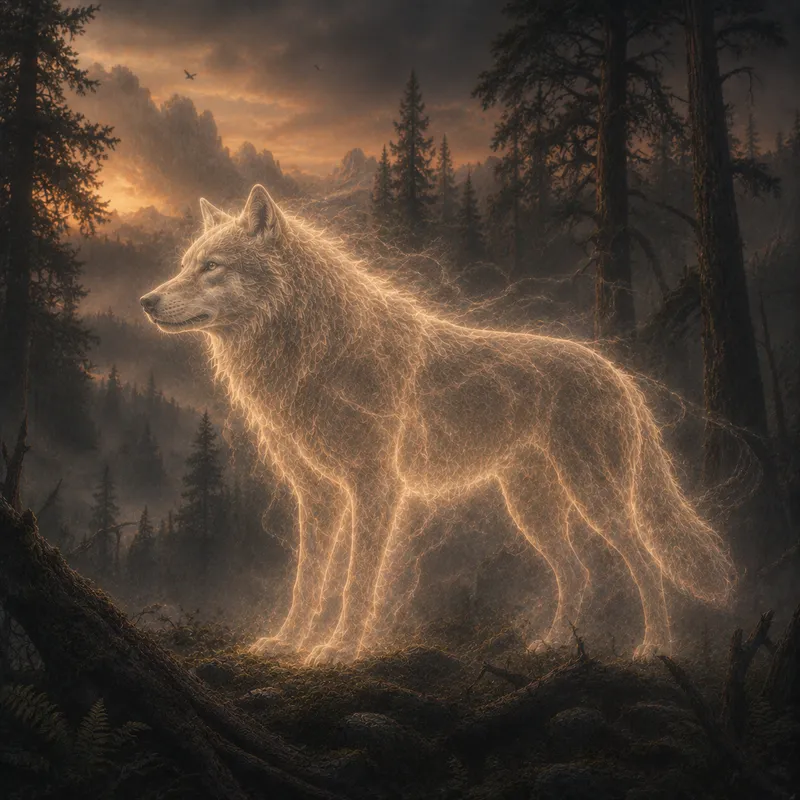
A paleotherian has a theriotype that is an extinct animal — such as a dire wolf, a thylacine, or a dinosaur.
Paleotherianthropy is a well-established term for therians who feel connected to a real creature that once walked the earth but is no longer living. It's still a true theriotype (a real, earthly animal) — just one from the past rather than the present.
Extinct animals paleotherians often describe
Any real animal that no longer lives on earth can be a theriotype. Some of the extinct species people commonly mention, with a few facts about each:
Dire wolf (Aenocyon dirus)
A large canid that lived across the Americas during the last Ice Age and died out roughly 13,000 years ago. It was heavier-built than a gray wolf, with a powerful bite suited to large prey. Thousands of dire wolf fossils have been recovered from the La Brea Tar Pits in Los Angeles. A 2021 genetic study found it was a separate lineage that split from the ancestors of today's wolves millions of years ago, rather than a close relative of the gray wolf.
Thylacine (Thylacinus cynocephalus)
Often called the Tasmanian tiger or Tasmanian wolf, but it was neither — it was a carnivorous marsupial with dark stripes across its lower back and the ability to open its jaws remarkably wide. Females carried young in a pouch. Its wolf-like shape is a famous example of convergent evolution. The last known thylacine died in Hobart Zoo, Tasmania, in 1936.
Smilodon
The best-known sabre-toothed cat, found in the Americas until around 10,000 years ago. Its upper canines could be longer than 20 cm in the largest species, and it had muscular forelimbs and a short tail, suggesting an ambush hunter that held prey down. Despite the nickname "sabre-toothed tiger", it wasn't closely related to modern tigers.
Woolly mammoth (Mammuthus primigenius)
A cold-adapted elephant with long shaggy hair, small ears, a layer of fat and long curving tusks, which grazed the Ice Age grasslands of the northern hemisphere. Most populations vanished around 10,000 years ago, but a small group survived on Wrangel Island in the Arctic until about 4,000 years ago. Its closest living relative is the Asian elephant.
Non-avian dinosaurs
The dinosaurs that weren't birds died out about 66 million years ago. Many theropods, including Velociraptor, are now known to have had feathers — and Velociraptor itself was only about the size of a large turkey, much smaller than in films.
Others people mention
- Haast's eagle — a huge New Zealand eagle that hunted flightless moa, gone for roughly 600 years.
- Dodo — a flightless pigeon relative from Mauritius, extinct by the late 1600s.
- Megalodon — a giant shark that disappeared around 3.6 million years ago.
- Cave bear — a large, mostly plant-eating European bear of the Ice Age.
Feeling an animal you can never meet
Most therians can watch their theriotype, visit it, or listen to recordings of its calls. Paleotherians can't, and many describe that as one of the most distinctive parts of their experience. Their understanding has to be pieced together from fossils, scientific reconstructions and close living relatives.
Some ways paleotherians commonly connect with their theriotype:
- Reading current palaeontology, since ideas about how extinct animals looked and behaved keep improving.
- Spending time with living relatives — a dire wolf therian watching wolves, a mammoth therian learning about elephants.
- Visiting museum fossils or skeleton casts where possible.
- Paying attention to which instincts feel "theirs", even where science has no answer yet.
Some paleotherians also describe a sense of loss or loneliness tied to their animal being gone. That feeling is understandable and worth talking about with understanding friends or community members.
Paleotherian, therian or otherkin?
The dividing line between therian and otherkin is whether the being is real or mythical/fictional — not whether it's alive today. Because extinct animals really existed, paleotherians fall under therianthropy.
A few tricky cases:
- Movie versions. Identifying with a fictional, film-style dinosaur that differs from the real animal leans more toward otherkin than paleotherian. Identifying with the real animal, as best science understands it, is paleotherian.
- Birds. Birds are living dinosaurs, but a hawk or owl therian isn't a paleotherian — the term is for extinct species.
- Recently extinct animals. Some people use paleotherian for any extinct animal, others mainly for prehistoric ones. Both uses are common.
Questions for reflection
- Do I identify with this animal as it really was, or with how it's shown in films and games?
- Which of my instincts match what scientists think about its behaviour?
- Does a living relative feel close, or clearly "not quite me"?
- Is this an animal I feel I am, or one I find deeply fascinating?
🌟 In Short
- Your theriotype is a real but extinct animal
- Examples: dire wolf, thylacine, mammoth, dinosaurs
- It's a true theriotype — real, just prehistoric
Paleotherian FAQ
Is a paleotherian a real therian?
Yes. A paleotherian identifies as a real, earthly animal — just one that is now extinct. That is squarely within therianthropy.
Can a dinosaur be a theriotype?
Yes, if you identify with a real dinosaur species. If the identity is tied to a fictionalized version, such as a specific movie creature, otherkin may describe it better.
What if science changes what my animal looked like?
That happens often in palaeontology. Many paleotherians find new discoveries exciting rather than threatening, since the identity is about the animal itself, not one particular reconstruction.
Can I be a paleotherian and have a living theriotype too?
Yes. Someone might identify as a thylacine and a fox, for example, which would make them both paleotherian and polytherian.
How can I figure out if my theriotype is extinct?
Start with self-reflection on the instincts and sensations you notice, then learn about animals that match them, living and extinct. The theriotype quiz can suggest directions, but treat any result as a starting point rather than an answer.