🦊 Fox
Type: Theriotype (real, earthly animal)
By the Inner Therian team · Last updated October 10, 2026
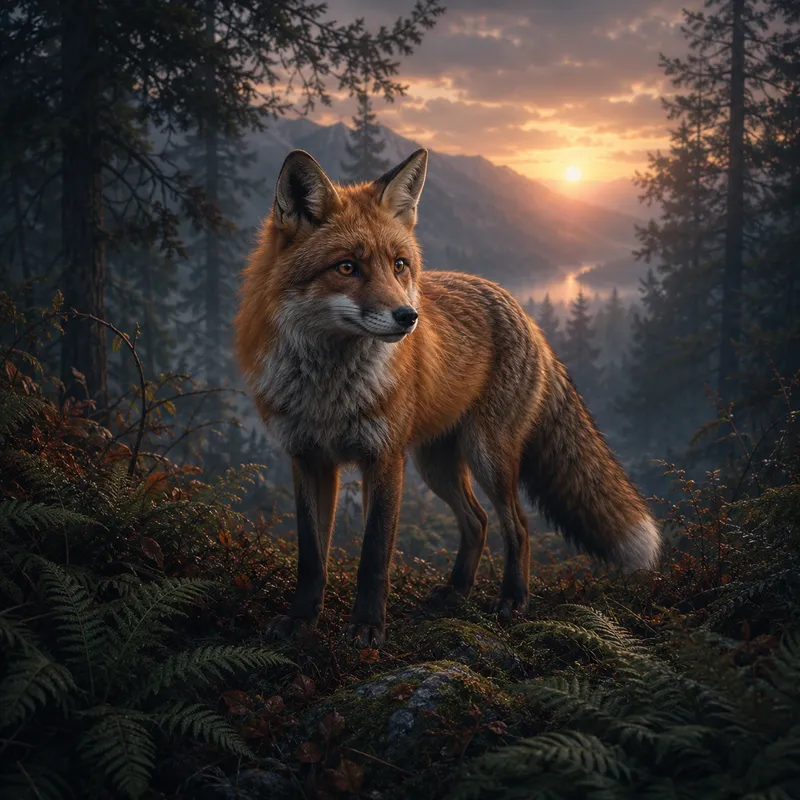
Fox therians are known for cleverness, curiosity, and adaptability. Foxes thrive on the edges — between forest and field, solitude and play — and fox therians often feel the same: independent, quick-thinking, and a little mischievous.
Where wolves lean into the pack, foxes lean into self-reliance and wit. Fox therians often describe themselves as resourceful problem-solvers who enjoy their own company but still love playful connection on their own terms. Many feel a strong pull toward dawn and dusk, exploration, and a playful, clever energy.
More Than One Kind of Fox
"Fox" covers a whole group of small canids. The red fox (Vulpes vulpes) is the one most people picture, and it is the most widely distributed wild carnivore on Earth, found across North America, Europe, Asia, North Africa and, after being introduced, Australia. But there are many others:
- Arctic fox: thick fur, small rounded ears, and a coat that turns white in winter in most populations.
- Fennec fox: the smallest fox, with enormous ears that help it hear prey underground and shed heat in the desert.
- Gray fox: a North American fox with curved claws that can climb trees, unusual for a canid.
- Kit and swift foxes: small foxes of dry grasslands and deserts.
Some fox therians feel simply "fox", while others feel strongly drawn to one species, its climate and its body. Paying attention to phantom sensations like ear size or coat thickness can help you notice which, if any, fits.
How Foxes Actually Live
Red foxes are often called solitary, but that is only half true. They usually hunt alone, yet many live in small family groups, particularly while raising kits in spring. A pair may stay together through the breeding season, and in some areas older offspring linger to help.
A few details that fox therians often find familiar:
- The mousing pounce. Foxes listen for rodents under snow or grass, then leap high and dive nose-first onto them.
- Caching. Foxes bury extra food in scattered hiding spots and remember where to return.
- A surprising voice. Red foxes have a wide range of calls, from sharp barks to eerie screams and the chattering "gekkering" they make in close encounters.
- Edge habitats. Foxes thrive where woodland meets field, and many now live comfortably in towns and cities.
- Twilight activity. They are often most active around dusk and through the night.
Fox eyes have vertical slit pupils, a trait shared with cats rather than with wolves or dogs. It's one reason foxes are sometimes described as cat-like.
The Fox Experience, in Everyday Terms
Many fox therians say their fox side shows up less as a big, dramatic feeling and more as a style of moving through the world. Common descriptions include:
- Wanting to explore the "in-between" places: alleys, hedgerows, the edge of a park at sunset.
- Squirrelling away snacks, small treasures, or ideas for later.
- A playful, teasing streak with close friends, paired with wariness around strangers.
- Finding clever workarounds rather than confronting a problem head-on.
- Phantom sensations of large, swivelling ears or a heavy brush of a tail during a phantom shift.
Others feel the fox mostly through instinct during sensory shifts: tracking small sounds, feeling alert to movement at ground level, or noticing smells first.
Fox, Coyote or Cat?
Foxes sit at a crossroads between canine and feline traits, which is why fox therians sometimes question whether they are a coyote or a domestic cat instead.
- Fox vs coyote. Both are adaptable and clever, but coyotes are larger, more social and often hunt in pairs or groups. Fox therians tend to describe a smaller, lighter body and more solo hunting instincts.
- Fox vs cat. Both pounce, both have slit pupils, and both enjoy independence. The difference often lies in instinct: foxes are canids that cache food, dig dens and call to family, while cats knead, groom constantly and seek warm resting spots near people.
- Fox vs wolf. Wolves are built around a cooperative pack and long-distance travel. If belonging to a family group is central for you, the wolf may be worth reading about too.
Misconceptions About Fox Therians
"Foxes are sly and deceptive, so fox therians must be too." The cunning-fox image comes from fables and folklore, not biology. Real foxes are cautious, resourceful survivors. Being a fox therian says nothing about honesty.
"Being a fox therian is the same as having a fox fursona." A fursona is a creative character someone designs, while a theriotype is an involuntary sense of being that animal. Plenty of people are one and not the other; see our guide to furries and therians for the difference.
"Foxes are basically small dogs." Foxes are canids, but they belong to a different group from wolves and dogs and behave differently in many ways, from their pupils to their solo hunting.
🌟 Signs the Fox Might Be Your Theriotype
- You solve problems with cleverness rather than force
- You value independence but enjoy playful company
- You feel most alert and alive at dawn or dusk
- You experience a phantom bushy tail or large ears
- Curiosity pulls you into new places and ideas
🌀 Common Shifts
Common shifts include mental shifts toward a curious, playful mindset and phantom shifts of a large tail and ears. Learn more on our shifts guide & quiz.
💚 A Note on Respect
Your theriotype isn't a choice, a phase, or a costume — and only you can truly know it. A quiz like ours can point you toward animals worth reflecting on, but take your time. There's no "fake" therian and no rush. If the Fox resonates, explore it gently through introspection, dreams, and community.
Fox Theriotype FAQ
How do I know if I am a fox or just love foxes?
Admiring foxes is not the same as feeling you are one. Therians usually describe an internal sense of identity: instincts, phantom sensations or a mindset that feels like their own rather than something they are drawn to from outside. If you feel deep kinship with foxes without identifying as one, the otherhearted label may also be worth exploring.
Can I be a fennec or Arctic fox therian?
Yes. Any real fox species can be a theriotype. Some therians identify with a single species, and others with foxes as a group, which is described as being a cladotherian.
Why do I feel most alert at dusk?
Red foxes are often most active from dusk through the night, and many fox therians report feeling livelier at twilight. That said, plenty of people of every kind are night owls, so treat it as one clue among many rather than proof.
Is gekkering or making fox sounds a normal part of being a fox therian?
Some fox therians vocalise during mental shifts and some never do. Neither is required. If you enjoy making sounds, find a private or accepting space so it feels comfortable rather than stressful.