🐦⬛ Raven / Corvid
Type: Theriotype (real, earthly animal)
By the Inner Therian team · Last updated October 10, 2026
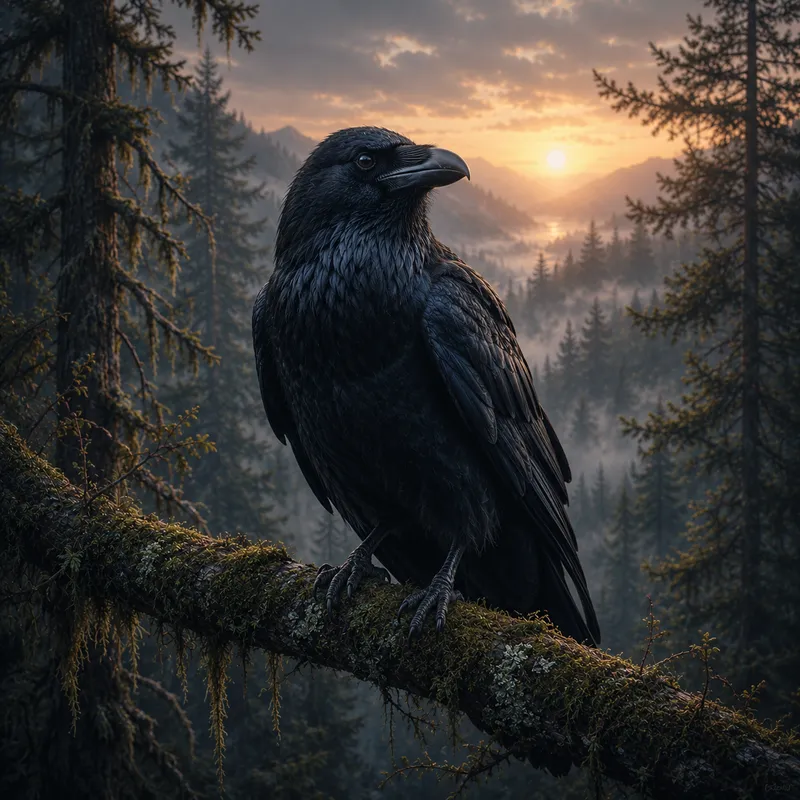
Raven and corvid therians (crows, magpies, jays) are brilliant, curious, and playful. Corvids are among the smartest animals alive, and corvid therians often describe sharp problem-solving, a love of novelty, and a mischievous, social wit.
Corvid therians tend to be clever and curious, with strong memories and a fascination for interesting (sometimes shiny) things. They blend deep intelligence with genuine playfulness and strong social bonds.
Meet the Corvid Family
Corvids are a family of birds that includes ravens, crows, rooks, jackdaws, magpies, jays and nutcrackers. Surprisingly, they're songbirds. The common raven is the largest songbird in the world. Corvids live almost everywhere people do, from the Arctic to deserts to city centers, and many species do very well in towns and cities.
If you're unsure whether you're a raven or a crow, these differences help:
| Common raven | Crow (e.g. American crow) | |
|---|---|---|
| Size | Larger — about 60 cm long, close to a red-tailed hawk | Smaller — about 40–50 cm long, noticeably bigger than a pigeon |
| Tail in flight | Wedge- or diamond-shaped | Fan-shaped, squared off |
| Voice | Deep, croaking, wide variety | Higher "caw" |
| Social life | Often in pairs; young birds gather | Often family groups and big winter roosts |
What Makes Corvids So Clever
Corvids have relatively large brains for their body size and are often compared with great apes on problem-solving tests. Well-documented examples include:
- Tool use. New Caledonian crows make and use hooked tools from twigs and leaves to pull insects out of holes.
- Face memory. Crows can recognize individual human faces, remember people who threatened them, and pass that warning on to other crows.
- Thinking about who's watching. Scrub jays that store food will often move it later if another bird saw them hide it.
- Play. Ravens have been seen sliding down snowy slopes, playing with sticks, and doing rolls in flight for no obvious reason other than fun.
- Vocal range. Ravens make a huge variety of calls, and some corvids can imitate other sounds, including human speech.
Ravens also have a famous relationship with wolves. They often follow wolf packs and feed on what wolves leave after a kill, and the two species are sometimes seen interacting playfully.
Being a Corvid Therian
Many corvid therians describe a mind that never stops: noticing patterns, poking at puzzles, collecting odd facts and objects, and getting restless when there's nothing new to look at. Some common experiences:
- Collecting and caching. Small treasures like stones, keys, feathers or bottle caps, kept in particular hiding spots.
- Grudges and loyalty. A sharp memory for who was kind and who wasn't. Many corvid therians say they're slow to trust but very loyal once they do.
- Chatter. An urge to mimic sounds, make clicks and croaks, or talk to themselves while working something out.
- Phantom wings and a phantom beak, sometimes with a sense of the head jerking in quick, tilted movements while they study something.
- Mental shifts that feel mischievous and playful rather than predatory.
Unlike hawks or owls, corvids aren't specialist hunters. They're opportunistic omnivores that eat seeds, insects, eggs and carrion. Many corvid therians describe a headspace that is neither strongly predator nor strongly prey. It's more of a clever scavenger that keeps an eye on everything and isn't afraid of much.
Myths About Ravens and Corvid Therians
- "Corvids steal shiny things." This is mostly folklore. A study of magpies found they were actually wary of shiny objects rather than drawn to them. Corvids collect things because they're curious, not because they're attracted to sparkle.
- "Ravens are bad omens." Ravens are linked with death in some traditions, but in others they're seen as clever creators, messengers or tricksters. In Norse myth, for example, the god Odin has two ravens, Huginn and Muninn, often translated as "thought" and "memory." A corvid theriotype says nothing about a person being dark or unlucky.
- "Corvid therians are just goth." Style and theriotype aren't related. A corvid therian might dress in bright yellow.
Questions for Questioning Corvids
- Do you feel more like a big, croaking raven, a crow in a busy family flock, or a bright magpie or jay?
- When you solve a problem, does it feel like play?
- Do you keep "caches," whether physical objects or mental collections of facts?
- Do your shifts feel watchful and clever rather than hungry or scared?
If you relate to several corvid species and can't pick one, a cladotherian identity (corvids as a group) might fit better than a single species.
🌟 Signs the Raven / Corvid Might Be Your Theriotype
- You're a sharp, creative problem-solver
- You're endlessly curious and drawn to interesting things
- You have a great memory for people and details
- You're both social and mischievous
- You experience phantom wings or a tail
🌀 Common Shifts
Corvid therians often report phantom wing shifts, curious/playful mental shifts, and sensory shifts toward sight. Learn more on our shifts guide & quiz.
💚 A Note on Respect
Your theriotype isn't a choice, a phase, or a costume — and only you can truly know it. A quiz like ours can point you toward animals worth reflecting on, but take your time. There's no "fake" therian and no rush. If the Raven / Corvid resonates, explore it gently through introspection, dreams, and community.
Raven / Corvid Theriotype FAQ
What is the difference between a raven therian and a crow therian?
They are different species with different sizes, voices and social lives, and many corvid therians feel strongly that they're one and not the other. Others identify with corvids in general. Watching real ravens and crows, in person or on video, often helps people tell which one feels right.
Do corvid therians have to be smart?
No. Corvids are clever, but a theriotype is about identity, not intelligence. Corvid therians have all kinds of strengths, and nobody has to prove their theriotype by passing tests.
Can a magpie or blue jay be my theriotype?
Yes. Magpies and jays are corvids too. This page groups the family together, but naming your specific species is completely valid.
Is it normal to want to make bird sounds?
Many avian therians feel an urge to vocalize during mental shifts. That's fine in private or with understanding friends. Just be thoughtful about where you do it so it doesn't cause problems for you at school or work.
Are corvid therians predator or prey?
Many describe something in between: a curious, opportunistic headspace. Real corvids eat almost anything and also need to watch out for hawks and owls, so both instincts can show up.